Information from The Dudson Centre & Museum
Dudson Centre Exhibition Seeks Former Workers’ Stories for Major Heritage Exhibition
The Dudson Centre is calling on former Dudson employees and local residents to share their memories as part of a new exhibition celebrating the “everyday histories” of life inside one of Stoke-on-Trent’s most important pottery factories.
Heritage Open Days is returning to the Dudson Centre this September, and VAST is looking to connect with people who worked on the site, remember it being in operation, or worked at the Dudson Centre when it reopened as a Community Hub, to bring the exhibition to life, telling the stories of people based on the site from its days as a working factory, right up to the present day.
The Hope Street factory first opened for production in 1810, and the workforce grew as the brand began to go global. As technology advanced and production methods changed, production was steadily moved elsewhere, and by the time the Hope Street factory closed in 1980, there were only around 100 employees left at the site. The former factory entered a new chapter in 1994 when it was donated by the Dudson family to the local voluntary sector. Following a major redevelopment that kept the original bottle oven at its heart, the grade II listed centre was officially reopened by Her Majesty Queen Elizabeth II in 1999. This transformation was showcased in 2025’s Heritage Open Days exhibition.
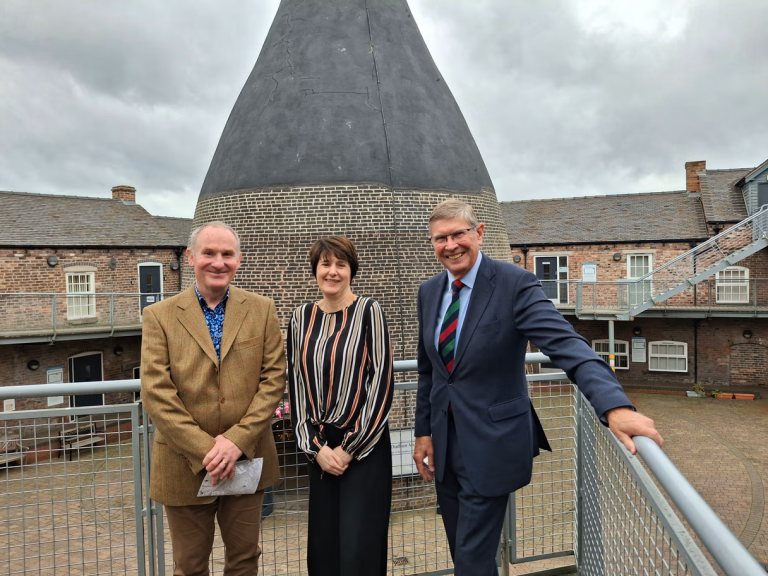
Now a thriving community hub, managed by Voluntary, Community and Social Enterprise (VCSE) Sector Local Infrastructure Organisation VAST, the Dudson Centre has a new lease of life as home to a number of local voluntary sector organisations and is going from strength to strength.
The Heritage Open Days exhibition at the end of the summer will showcase the people linked to Hope Street, the work they did, and what their working lives looked like as part of telling the story of the Potteries.
VAST Chief Executive, Lisa Healings said:
“Dudson’s Hope Street factory played a vital role in Stoke-on-Trent’s industrial and social history. By capturing the voices and memories of those who worked here, we can preserve that heritage for future generations and ensure these stories are not lost.”
Sir Ian Dudson KCVO CBE said:
“The Hope Street site provides some insight into the social history within pottery businesses. Pottery owners often lived on site in the early 19th century, and this was certainly true for the early Dudson potters. The factories also provided education for children who spent part of their day working and part in lessons. This fostered family involvement over two or more generations and this continued throughout the factory’s existence. As we hear from former employees, we would also be delighted for them to share memories of other members of their family who worked at the factory.”
Anyone who worked at the Hope Street Factory before it closed remembers the site in operation or was part of its early years as a community hub, is encouraged to get in touch and help shape the exhibition. If you have a story to tell, please contact Faye Angus, Communications and Content Manager on 01782 683030, email faye.angus@vast.org.uk or news@vast.org.uk, or send a WhatsApp message to 07418 613961.